






Published: September 20, 2026
AC vs DC Ceiling Fans: How to Choose the Right One
Buying a ceiling fan used to be a decision about how it looked. Now the first question in the shop is whether you want AC or DC, and the answer changes what you pay, how much noise you live with, and what it costs to run through summer.
September is the sensible time to sort this out. Fans get installed in a rush once the first proper heat arrives, and the good models sell out. Below is what separates AC and DC ceiling fans, and how to pick the right size while you are at it.
What AC and DC actually refer to
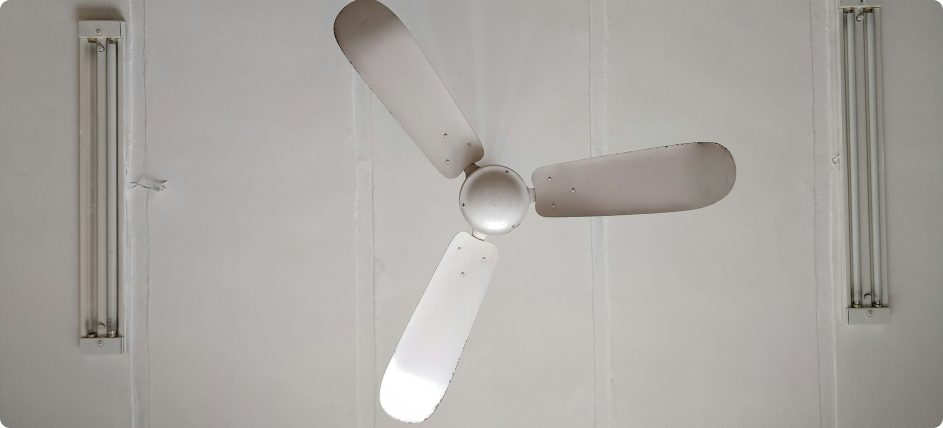
Both types plug into the same mains supply. The difference is inside the motor.
An AC motor runs directly on the alternating current coming out of your wall. It is the older, simpler design, usually controlled by a three-speed wall dial or a pull cord.
A DC motor has a small converter that changes the incoming supply to direct current before it reaches the motor. That extra step is what makes DC fans more efficient, quieter and easier to control, because a DC motor can be dialled up and down far more precisely than an AC one.
Running cost and efficiency
DC fans use noticeably less power than AC fans moving the same amount of air. Over a Sydney summer, with fans running most evenings and often overnight, that difference shows up on the bill.
The trade-off is upfront. DC fans cost more to buy, and the gap is meaningful on a whole-house fit-out of four or five rooms. For a bedroom used every night through summer, the running cost saving is worth paying for. For a guest room used a handful of times a year, it is harder to justify.
Noise, and why it matters more than people expect
This is the reason most people who switch to DC do not switch back. AC motors hum, and at low speed some of them hum audibly enough to notice in a quiet bedroom. DC motors are close to silent across their speed range.
If the fan is going in a living room with a television on, it will not bother you. In a bedroom or a study, it will.
Control and features
DC fans almost always come with a remote as standard, along with more speed settings, a timer, and a reverse function for winter. Many can be wired into a smart home setup.
AC fans are typically wall-controlled with three speeds. That suits plenty of rooms perfectly well, and a wall control has one real advantage: there is nothing to lose down the side of the couch.
| AC ceiling fan | DC ceiling fan | |
|---|---|---|
| Purchase price | Lower | Higher |
| Running cost | Higher | Lower |
| Noise at low speed | Audible hum on some models | Near silent |
| Speed settings | Usually three | Usually six or more |
| Control | Wall dial or pull cord | Remote as standard |
| Reverse for winter | On some models | Almost always |
| Best suited to | Guest rooms, garages, low-use spaces | Bedrooms, studies, main living areas |
Getting the size right
Size is where most people go wrong, and it matters more than the motor type. A fan that is too small for the room will be run flat out all summer and still not move enough air.
Blade span is measured across the full diameter. As a rough guide:
- Small bedroom, study or nursery: around 1,200mm
- Standard bedroom: 1,200mm to 1,300mm
- Large bedroom or small living room: 1,300mm to 1,400mm
- Large or open-plan living area: 1,400mm and above, or two fans rather than one
Long or L-shaped rooms are the exception. Two smaller fans placed well will almost always beat one large fan sitting in the middle, because a single fan only moves air in the space directly around it.
Ceiling height and clearance
Fan blades need to sit a minimum distance above the floor, so a standard 2.4 metre ceiling leaves less room to play with than people assume. On a raked or high ceiling the fan needs an extension rod to bring it down to where it will move air. Our ceiling fan installation team will work out the drop before ordering anything, which saves buying a rod that turns out to be the wrong length.
Outdoor and alfresco areas
An indoor fan will not last outside. Alfresco areas, patios and covered decks need a fan rated for outdoor use, with a sealed motor and blades that will not warp in humidity. Closer to the coast, salt air is hard on fittings and a marine-rated model is worth the extra.
Outdoor installations also need weatherproof wiring, which is part of why they take longer than an indoor swap.
What changes the installation job
What the job involves depends almost entirely on what is already in the ceiling.
Swapping an old fan for a new one is the simplest. The wiring, the switch and the mounting brace are already in place.
Converting a light fitting to a fan is the middle ground. The wiring is usually there but the mount often is not, and a remote receiver may need fitting.
Putting a fan somewhere with no existing ceiling point is the biggest job. New cable has to be run through the roof cavity, a control added, and the switchboard checked for capacity if several fans are going in at once. Older boards especially should be checked before you add load to them.
So which one should you buy?
For a bedroom, a study or a main living area you use every day through summer, buy DC. The quieter motor and the lower running cost justify the higher purchase price, and you will notice both.
For a guest room, a garage, a laundry or anywhere used occasionally, AC does the job for less money.
Most houses end up with a mix, and there is nothing wrong with that. Get the size right first, then choose the motor.
Thinking about fans before summer?
Our licensed electricians install ceiling fans across Sydney, the Blue Mountains, the Central Coast and the Southern Highlands, and we will tell you straight whether the spot you have picked will work. Call 1300 164 206 or ask about ceiling fan installation in Sydney for a fixed price before we start.
Request a Quote
"*" indicates required fields