







2026 EV Charging Guide for Australian Drivers
Charging types, how long it actually takes, range anxiety, & the real cost trend behind
why more Aussies are making the switch

Upfront Pricing, No Hidden Costs

24/7 Emergency Services

Lifetime Labour Guarantee
Upfront Pricing, No Hidden Costs
24/7 Emergency Services
Lifetime Labour Guarantee
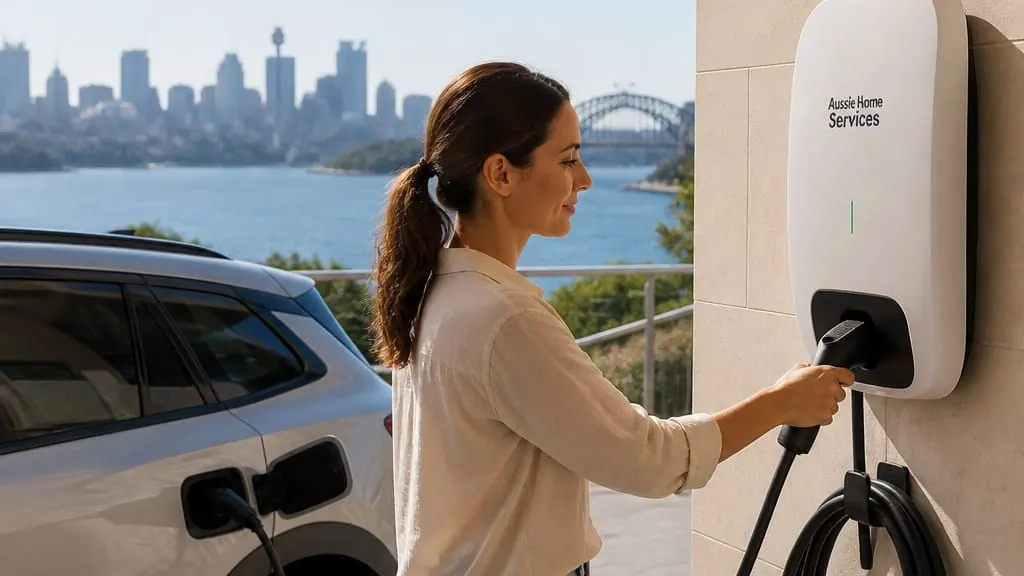
Home charging is rapidly becoming the new standard for Australian households.
TLDR
- EVs outsold petrol-only cars in Australia for the first time in June 2026, 24% of new car sales, up from 10.7% a year earlier.
- Running an EV costs roughly a third of running a petrol car per 100km, and solar (plus a home battery) can push that even lower.
- Home charging (Level 2) adds about 40km of range per hour; public DC fast charging can add 60-70km every 10 minutes.
- Average new EV range has grown from about 100km (2006) to around 500km (2026), and charging speed has improved just as dramatically.
- Range anxiety is far less of an issue in 2026: most EVs cover a full week of average driving on one charge, backed by 5,000+ public chargers and a new $100 million NSW charging rollout.
Something quietly significant happened in June 2026: electric vehicles outsold pure petrol cars in Australia for the first time. Not petrol and diesel combined, petrol alone. It's a sign of how fast this has moved, and it means more Australians than ever are asking the same practical question: how does charging an EV actually work?
This guide covers everything from the basics of charging types through to the numbers that matter most, how long it takes, what it costs, and whether range anxiety is still something to worry about in 2026.
EV Adoption in Australia: The 2026 Numbers
The shift away from petrol has accelerated faster than most industry forecasts expected, and the last few months have been the clearest sign yet.
Two forces are driving this at once: EVs are getting cheaper to buy, and petrol isn't. Which brings us to the next chart.
Petrol vs Electricity: The Real Cost Trend
Petrol prices in Australia have been volatile for a decade, spiking, crashing, and spiking again. Electricity prices have moved too, but far less dramatically
Sources: Australian Bureau of Statistics, Australian Institute of Petroleum, Australiametrics, converted using typical Australian fuel and energy consumption averages. Directional figures, not a precise fleet-wide series; actual running costs vary by vehicle, driving style and location.
The $5-6 per 100km figure above assumes charging from the grid at typical retail electricity rates. If your home has rooftop solar, charging during daylight hours can bring that cost close to zero, you're using electricity you've already generated rather than buying it back from the grid. Pairing solar with a home battery extends that benefit into the evening, storing excess solar generated during the day and using it to charge overnight, rather than exporting it back to the grid for a much lower feed-in rate. For a household that drives an average amount and charges mostly at home, solar plus a battery is realistically the cheapest way to run an EV in Australia, well below even the $5-6 per 100km grid-charging figure shown here.
Types of EV Charging
Every EV charger falls into one of three levels, and the level determines how fast your car actually charges.
Level 1: Standard Power Point
Plugging straight into a normal household outlet. Slowest option, delivering roughly 2 to 2.4kW, which works out to about 10 to 15km of range per hour. Fine for plug-in hybrids or overnight top-ups if you rarely drive far, too slow to rely on for daily full charges in most EVs.
Level 2: Home or Public AC Charging
The most common setup for home charging. A dedicated wall unit, installed by a licensed electrician, delivers up to 7kW on standard single-phase power (around 40km of range per hour) or up to 22kW on three-phase. This is what most home EV charger installations involve.
Level 3: DC Fast Charging
Found at public charging stations, not homes. These deliver anywhere from 25kW to 350kW, capable of adding 60 to 70km of range for every 10 minutes plugged in. This is the road-trip option, not something installed in a garage.
AC vs DC, and Plug Types
AC (alternating current) is what comes out of your wall and needs the car's onboard inverter to convert it to DC before it reaches the battery. DC (direct current) fast chargers skip that step, feeding power straight to the battery, which is why they're so much faster. In Australia, Type 2 is the standard AC plug on nearly every new EV, while CCS2 handles DC fast charging. CHAdeMO exists but is now rare, found mainly on older Nissan Leaf models.
Plugging in has become as routine as it looks, most home charging is a simple, one-handed job.
Type 2 handles AC home and public charging; the same car's CCS2 port adds two extra DC pins below for fast charging. Diagrams are simplified for clarity, not to scale.
How Long Does It Actually Take to Charge?

Fast public charging increasingly fits into everyday breaks, like stopping for a coffee.
The honest answer is: it depends on your battery size, your charger, and how much charge you're adding. Rather than give you a single number that won't match your car, use the calculator below.As a rule of thumb: Level 1 gives you about 10-15km of range per hour, Level 2 gives you about 40km per hour, and Level 3 DC fast charging gives you 60-70km for every 10 minutes. Charging also slows down above 80% on most fast chargers, the battery protects itself by tapering the charge rate, which is why road-trip charging strategy usually means topping up to 80% and moving on, not waiting for 100%.
Charging technology has improved considerably. The first mainstream home EV chargers topped out around 3.6kW, and public fast chargers a decade ago rarely exceeded 50kW. Today's ultra-rapid public chargers deliver 150kW to 350kW, and newer 800-volt vehicle architectures, like BMW's Neue Klasse platform, are built specifically to take advantage of it. The BMW iX3, for example, can add roughly 300 to 350km of range in just 10 minutes on a compatible ultra-fast charger, a 10% to 80% top-up in around 21 minutes under ideal conditions, figures that would have sounded implausible even five years ago.
Home charging speeds have improved too, if less dramatically: single-phase 7kW has become the standard rather than the exception, and three-phase 22kW home installs are increasingly common, though older properties may need a switchboard upgrade to safely support the extra load. The bigger shift has been on the public network: as more cars adopt 800-volt architecture, expect ultra-rapid charging to keep closing the gap with a petrol station stop.
Is Range Anxiety Still a Real Concern in 2026?
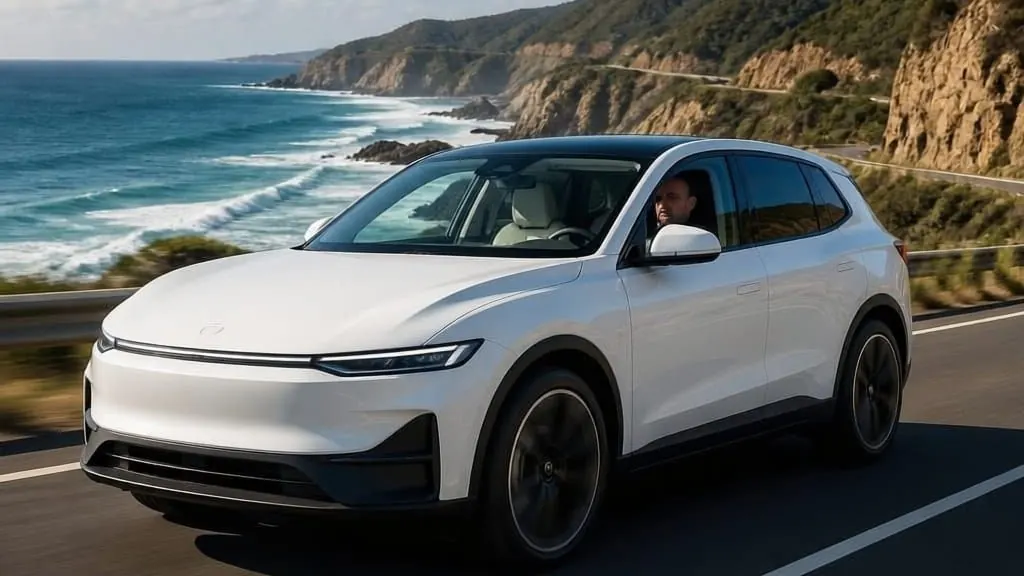
With real-world ranges now reaching close to 500km per charge, longer drives are far less of a planning headache.
Less than it used to be, and the numbers back that up. Battery range has improved dramatically over the last two decades, which is a big part of why.
Sources: International Energy Agency, Statista, industry range reporting. Approximate averages for mainstream models, methodology (WLTP vs EPA, global vs regional) varies by source and year, treat as directional rather than a single precise series.
Budget and Small EVs: Compact hatchbacks and city cars generally offer 340 to 530km of range. The BYD Dolphin spans 340km (Essential) to 427km (Premium), while the MG4 ranges from around 350km (Excite) up to 530km on the Long Range variant.
Family SUVs and Mid-Size Sedans: Popular family options typically sit around 450 to 535km of certified range. The Tesla Model Y offers 455 to 533km depending on variant, while the Hyundai Ioniq 6 offers a similar 500km-plus WLTP range, comfortable for most weekly driving with room to spare.
Long-Range and Premium Models: High-end SUVs and large battery configurations now push past 650 to 800+ km on flagship platforms. The all-new BMW iX3 (Neue Klasse), landing in Australia in 2026, offers an official WLTP range of up to 805km on its launch variant, among the longest of any production EV, powered by a 108.7kWh usable battery on BMW's new 800-volt architecture.
Official WLTP figures are a ceiling, not a promise. Real-world range typically runs 10-20% below the certified number once you account for highway speeds, air-conditioning, and cold weather, closer to 85% of the rated figure is a sensible planning assumption. A car rated at 450km, for example, will usually deliver somewhere around 380-400km in genuine mixed driving, still comfortably enough for the average Australian's weekly needs, just worth knowing before a longer trip.
The average Australian drives around 36 to 40km a day. Most EV batteries comfortably cover a full week of that kind of driving on a single charge. Combined with more than 5,000 public charging sites now across the country, and fast chargers roughly every 100 to 200km on major routes, running out of charge unexpectedly has become a genuinely rare event rather than a daily worry.
The bigger practical question isn't "will I run out" so much as "where will I top up on a longer trip", which is more of a planning habit than a real risk once you've done it a couple of times.
EV Charging Networks and Apps
Public charging in Australia runs through a handful of major networks, each with their own app, pricing, and coverage footprint. Knowing which apps to have installed before you need them makes public charging far less stressful.The closest thing to a universal map, covers nearly every network, shows plug types, pricing, and driver-reported charger status.
Australia's largest fast-charging network, with real-time availability and in-app payment.
Ultra-rapid chargers along major highways and in metro areas, no subscription required.
Fast chargers rolling out at Ampol service stations, convenient for road trips already stopping for fuel or snacks.
Tesla's own network, now open to many non-Tesla EVs too, typically reliable and fast.
A regional-strong network, useful for trips outside the major metro areas.
Checking a charger's live status before you leave, rather than after you arrive, is the single habit that does the most to avoid a wasted stop.
For homeowners, the practical impact is a steadily improving public charging network to complement home charging, plus continued momentum behind the case for switching: the NSW Government estimates EV owners can save up to $3,000 a year on fuel, and around 40% on maintenance, savings that can go even further when paired with home solar as covered above.
Ready to install a home charger? Our licensed electricians (NSW Licence 273594C) handle the full process for Sydney homes and businesses, from switchboard assessment through to sign-off. Call 1300 164 206, or ask about AHS Cover Care for 15% off your installation.
See our EV charger installation service